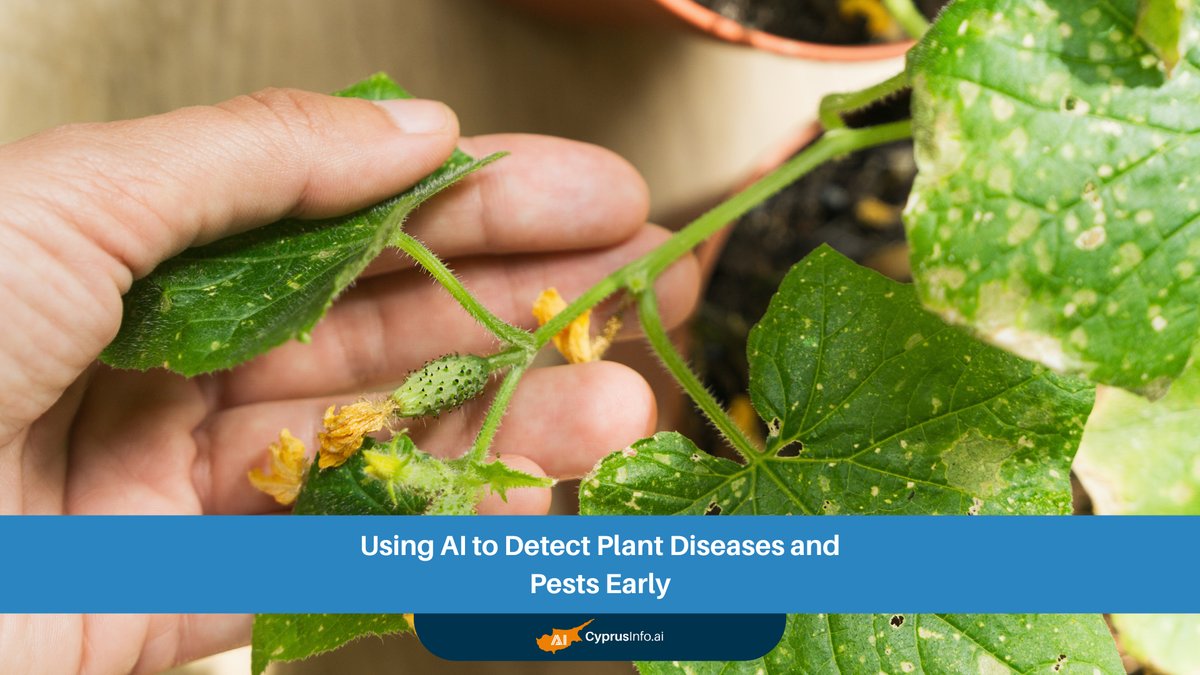
In the modern era of food production, AI for plant disease detection has emerged as a transformative force, bridging the gap between traditional farming wisdom and cutting-edge technological precision. As the global population continues to surge, the pressure on agricultural systems to produce more with fewer resources has never been greater. Crop losses due to pests and diseases account for nearly 40% of global food production decreases annually. This is where AI for plant disease detection provides a critical lifeline, allowing for real-time monitoring and intervention before infections reach catastrophic levels.
By leveraging smart farming technology, growers can now identify microscopic threats that the human eye might miss until it is too late. The integration of AI for plant disease detection into the daily workflow of a farm represents a shift toward precision agriculture, where every plant is treated with the specific care it requires. This article delves deep into the mechanisms, benefits, and future of AI for plant disease detection, providing an expert-level overview for farmers, investors, and agritech enthusiasts.
The Critical Role of AI for Plant Disease Detection in Modern Agronomy
The traditional method of scouting for diseases involves manual inspection, which is not only labor-intensive but also prone to human error and subjectivity. AI for plant disease detection changes this dynamic by utilizing automated crop monitoring systems that work tirelessly across thousands of hectares. These systems use high-resolution imagery and sophisticated algorithms to scan for the earliest signs of stress, discoloration, or structural changes in foliage.
Highlight Points:
- Early Identification: Detecting pathogens days or weeks before visible symptoms appear.
- Resource Optimization: Reducing the indiscriminate use of pesticides and fertilizers.
- Data-Driven Decisions: Moving away from guesswork to empirical evidence.
- Scalability: Monitoring vast agricultural expanses with minimal manpower.
"The application of AI for plant disease detection is not just an innovation; it is a necessity for sustainable global food security in the 21st century." — Global Agricultural Forum
How AI for Plant Disease Detection Works: The Technical Backbone
To understand why AI for plant disease detection is so effective, we must look at the neural networks agriculture experts are now implementing. At its core, the system relies on Computer Vision (CV), a subset of artificial intelligence that trains machines to interpret and understand the visual world. By using deep learning plants datasets, these models learn to distinguish between a healthy leaf and one suffering from powdery mildew, rust, or aphid infestations.
Deep Learning and Convolutional Neural Networks (CNNs)
The most common architecture used in AI for plant disease detection is the Convolutional Neural Network. These networks process images in layers, identifying edges, textures, and eventually complex patterns associated with specific diseases. Through machine learning in farming, these models are fed millions of images—both healthy and diseased—to increase their accuracy rates to over 95%.
The Role of Hyperspectral Imaging
Standard cameras see in Red, Green, and Blue (RGB). However, AI for plant disease detection often utilizes hyperspectral sensors that capture wavelengths beyond human perception. These sensors can detect changes in chlorophyll levels and water stress, providing a "pre-symptomatic" look at crop health. This level of digital agronomy allows for interventions before the disease is even visible to a scout.
Benefits of Implementing AI for Plant Disease Detection
The transition to AI for plant disease detection offers a multitude of advantages that go beyond simple yield protection. It touches upon economic viability, environmental stewardship, and operational efficiency.
| Feature | Traditional Scouting | AI-Powered Detection |
|---|---|---|
| Speed | Slow, manual process | Real-time, instantaneous |
| Accuracy | Variable (60-70%) | Highly Consistent (90%+) |
| Cost over time | High labor costs | Low operational costs after setup |
| Environmental Impact | High (Broad-spectrum spraying) | Low (Targeted treatment) |
Achieving Sustainable Farming AI Goals
Environmental sustainability is a core pillar of modern agricultural policy. By utilizing AI for plant disease detection, farmers can apply "spot treatments" rather than spraying an entire field. This reduction in chemical runoff protects local water sources and preserves the health of the soil. This aligns perfectly with the growth of artificial intelligence Cyprus initiatives, which prioritize green technology in the Mediterranean landscape.
Practical Applications: Drones, Robots, and Smartphones
The hardware used to deploy AI for plant disease detection is as varied as the crops themselves. AI farming tools are now accessible to both industrial-scale operations and smallholder farmers.
- UAVs (Drones): Equipped with multispectral cameras, drones provide a bird's-eye view of the farm, identifying disease hotspots in minutes.
- Smartphones: Mobile apps allow farmers to take a photo of a leaf and receive an instant diagnosis via AI for plant disease detection models hosted in the cloud.
- Ground Robots: Autonomous rovers can navigate between rows of crops, performing early pest detection and even mechanical weed removal.
In regions like Paphos or Limassol, where viticulture is prominent, using AI for plant disease detection can save entire vintages from grapevine diseases like Esca or Flavescence dorée. This technology is a vital part of the agriculture sector in Cyprus.
CyprusInfo.ai: Empowering Your Agricultural Tech Journey
At CyprusInfo.ai, we specialize in bridging the gap between sophisticated technology and local business needs. For those interested in AI for plant disease detection, we offer a suite of services designed to accelerate adoption and maximize return on investment. Our platform serves as a hub for precision agriculture resources, connecting farmers with the latest AI farming tools and expert consultants.
What CyprusInfo.ai Offers:
- Strategic Consulting: We help you identify the best AI for plant disease detection software for your specific crop types.
- Vendor Vetting: Access our directory to find reliable providers of drones, sensors, and IoT devices.
- Market Insights: Stay updated on how AI growth in Cyprus is impacting the local agricultural market.
- Investment Guidance: Discover new business opportunities within the agritech space.
Challenges and Limitations in AI for Plant Disease Detection
While the potential for AI for plant disease detection is immense, it is important to address the hurdles that currently face the industry. Data quality is the most significant barrier; machine learning in farming requires vast amounts of high-quality, labeled data across different lighting conditions, growth stages, and weather patterns.
Furthermore, the "Digital Divide" remains a concern. While large-scale farms can easily afford automated crop monitoring, smaller farms may struggle with the initial capital expenditure. However, as AI for plant disease detection becomes more standardized, costs are falling rapidly, making these tools more accessible to the global farming community. For more on the technical side of development, see our guide on AI code generation which explores how these algorithms are built.
The Economic Impact: ROI and Yield Stability
For a business owner, the decision to implement AI for plant disease detection often comes down to the bottom line. The Return on Investment (ROI) is realized through three main channels:
- Yield Preservation: Preventing a 10-20% loss in crop volume directly increases revenue.
- Input Savings: Spending less on fungicide and pesticide reduces operational costs.
- Labor Efficiency: Redirecting staff from manual scouting to higher-value tasks.
According to the Food and Agriculture Organization (FAO), digital tools like AI for plant disease detection are essential for maintaining stable food prices in a volatile global market. By reducing the risk of total crop failure, AI for plant disease detection provides a level of financial security that was previously unattainable.
The Future of AI for Plant Disease Detection
Looking ahead, we are moving toward predictive modeling. Instead of just early pest detection, the next generation of AI for plant disease detection will predict disease outbreaks before they happen by analyzing weather patterns, humidity, and historical data. This proactive approach will define the future of smart farming technology.
Integration with the Internet of Things (IoT) will allow AI for plant disease detection systems to automatically trigger irrigation or climate control in greenhouses when a threat is perceived. We are entering an era of "autonomous agronomy," where the farm effectively manages its own health under the watchful eye of human supervisors.
Frequently Asked Questions about AI for Plant Disease Detection
How accurate is AI for plant disease detection compared to human experts?
Current AI models often exceed 90-95% accuracy, which is typically higher and more consistent than human scouts who may suffer from fatigue or lack of specialized knowledge across all disease types.Can AI for plant disease detection work without an internet connection?
Yes, many AI farming tools are designed for edge computing, meaning the processing happens directly on the drone or handheld device without needing a constant cloud connection.What types of crops can be monitored using AI?
Almost any crop can be monitored, but AI for plant disease detection is currently most advanced for high-value crops like grapes, citrus, potatoes, tomatoes, and cereal grains.Is AI for plant disease detection expensive to implement?
While there are high-end industrial systems, many affordable mobile-based solutions exist for smallholder farmers, making the technology increasingly accessible.Does AI for plant disease detection require special cameras?
Basic detection can be done with standard RGB cameras found on smartphones, but advanced early pest detection often requires multispectral or hyperspectral sensors.Can AI identify pests as well as diseases?
Yes, early pest detection is a core component of these systems, identifying insects like aphids, mites, and beetles by their physical presence or the damage patterns they leave behind.How does AI help in reducing pesticide use?
By identifying exactly where an infection is located, AI for plant disease detection enables variable rate application, meaning only the affected plants are treated.How much data does the AI need to learn a new disease?
Typically, thousands of labeled images are needed to train a robust model, though transfer learning techniques are reducing the amount of data required for new applications.Is AI for plant disease detection suitable for greenhouses?
Absolutely. In fact, the controlled environment of a greenhouse makes AI for plant disease detection even more effective due to consistent lighting and plant placement.What is the first step to start using AI on my farm?
The first step is identifying your most significant crop threats and consulting with a platform like CyprusInfo.ai to find a compatible software or hardware solution.Conclusion
In summary, AI for plant disease detection is revolutionizing the way we approach food production. By combining machine learning in farming with advanced automated crop monitoring, the agricultural sector can achieve unprecedented levels of efficiency and sustainability. The ability to perform early pest detection and disease diagnosis not only protects yields but also ensures the long-term health of our planet's ecosystems. As smart farming technology continues to evolve, those who embrace AI for plant disease detection will lead the way in a more resilient and productive agricultural future. Explore our blog for more insights into how artificial intelligence is reshaping every sector of the economy.
Transform Your Agricultural Strategy with AI for Plant Disease Detection
Join the leaders in precision agriculture and secure your farm's future today.
Ready to implement cutting-edge solutions? Our team is here to guide you through the AI revolution in farming.
Contact CyprusInfo.ai Experts