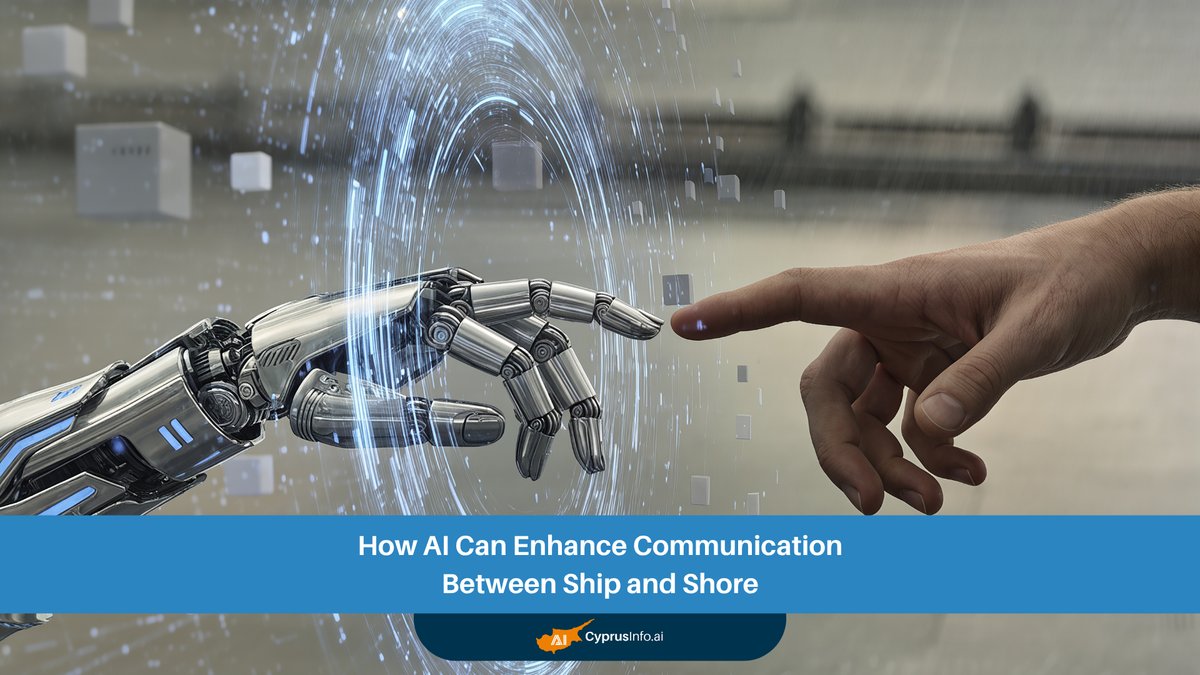
The vast expanse of the ocean, while a pathway for global trade, has historically posed significant challenges to reliable and efficient communication. For centuries, maritime operations relied on rudimentary methods, leading to delays, misunderstandings, and sometimes, critical safety lapses. Today, however, a new era is dawning. Artificial Intelligence (AI) is rapidly transforming the maritime landscape, particularly in the realm of ship-shore communication. The integration of AI in maritime communication is not merely an upgrade; it's a fundamental shift towards a safer, more efficient, and interconnected industry.
As vessels navigate complex routes and shore teams manage intricate logistics, the need for seamless, real-time data exchange becomes paramount. AI, with its capacity for processing vast datasets, predicting outcomes, and automating routine tasks, stands at the forefront of this revolution. From optimizing routes to enhancing crew welfare, the capabilities of AI in maritime communication are redefining operational standards and fostering unprecedented levels of connectivity across the seas.
This comprehensive guide delves into how AI is set to revolutionize ship-shore interactions, exploring the technologies, benefits, and future implications for the global shipping industry. We will uncover how AI-powered solutions are addressing long-standing challenges and paving the way for a smarter, more responsive maritime ecosystem.
The Current State of Maritime Communication and Its Hurdles
Traditional maritime communication systems, while functional, often grapple with inherent limitations. These can range from intermittent satellite connections in remote areas to the sheer volume of data generated by modern vessels. The reliance on legacy systems can lead to delays in critical decision-making, impacting everything from fuel efficiency to emergency response times. Historically, communicating effectively between a vessel at sea and its shore-based management has been a complex endeavor, fraught with technical and logistical challenges.
Challenges AI in Maritime Communication Aims to Solve:
Latency and Bandwidth Limitations: Satellite connections, while essential, can be slow and expensive, hindering real-time data flow for complex applications.
Data Overload: Modern ships generate immense amounts of data from sensors, engines, and navigation systems, making manual analysis cumbersome and prone to error.
Cybersecurity Risks: Increased digital connectivity also brings heightened vulnerabilities to cyber threats, demanding robust protective measures.
Crew Connectivity: Maintaining morale and mental well-being requires consistent, high-quality communication channels for crew members to connect with loved ones and access vital information.
Operational Efficiency: Lack of real-time insights can lead to suboptimal route planning, inefficient cargo handling, and reactive maintenance strategies.
"The sea, once a barrier to communication, is now becoming a canvas for digital transformation, with AI as the brushstroke. The potential for innovation is boundless."
Key Areas Where AI Transforms Ship-Shore Communication
The advent of AI introduces a suite of powerful tools that directly address these challenges, offering solutions that enhance every facet of maritime operations. The transformative impact of AI in maritime communication is evident across multiple critical areas.
Real-time Data Exchange and Analytics with AI
One of the most significant contributions of AI is its ability to process and interpret vast quantities of data instantaneously. Sensors on board vessels collect information on engine performance, weather conditions, cargo status, and navigational parameters. AI algorithms can analyze this data in real-time, providing shore-based teams with actionable insights. This facilitates proactive decision-making, from adjusting shipping route optimization to managing unforeseen issues. The result is significantly improved vessel communication optimization, leading to better resource allocation and reduced operational costs.
Predictive Analysis: AI can predict equipment failures, allowing for proactive maintenance and minimizing costly downtime. This is crucial for predictive maintenance maritime applications, extending asset life and enhancing safety.
Automated Reporting: Repetitive reporting tasks can be automated, reducing human error and freeing up crew time for more critical duties.
Enhanced Situational Awareness: Integration of real-time ship data analysis with external information sources (weather, traffic) provides a comprehensive operational picture for both ship and shore.
Enhanced Crew Connectivity and Welfare through AI
The well-being of seafarers is increasingly a priority, and robust communication plays a vital role. AI-powered systems can optimize satellite communication AI bandwidth allocation, ensuring that crew members have access to stable internet for personal use, telemedicine, and online training. This directly contributes to enhanced crew welfare communication, combating isolation and improving mental health.
AI can manage data traffic to prioritize personal communications during designated times.
Virtual assistants powered by AI can provide information and support to crew members, even in offline environments.
Improved connectivity allows for remote medical consultations, a significant benefit for long voyages.
Optimized Fleet Management and Logistics with AI
For fleet managers, AI offers unparalleled capabilities in overseeing and coordinating multiple vessels. AI algorithms can analyze factors like fuel consumption, weather patterns, port congestion, and cargo schedules to recommend the most efficient routes and operational adjustments. This empowers fleet management AI solutions to make data-driven decisions that minimize delays and maximize profitability. The ability for shore teams to have a clear and constantly updated picture of their entire fleet's status thanks to AI in maritime communication is revolutionary.
Traditional vs. AI-Enhanced Fleet Communication
Feature | Traditional Communication | AI-Enhanced Communication |
|---|---|---|
Data Exchange Speed | Often delayed, limited bandwidth | Real-time, high-volume, intelligent filtering |
Decision Making | Reactive, human-intensive analysis | Proactive, AI-driven insights and recommendations |
Route Optimization | Manual, based on static charts/weather | Dynamic, constantly adapting to AI marine weather forecasting, traffic |
Maintenance | Scheduled or breakdown reactive | Predictive, based on sensor data analysis |
Crew Connectivity | Limited, often costly | Optimized, managed bandwidth for welfare |
Risk Management | Manual assessment, lagging indicators | Proactive identification of anomalies, real-time alerts |
Predictive Maintenance and Safety Enhanced by AI
Safety is paramount in the maritime industry. AI plays a crucial role in enhancing safety protocols through continuous monitoring and predictive capabilities. By analyzing data from machinery, AI can detect subtle anomalies that might indicate impending failures, enabling shore teams to schedule maintenance before critical issues arise. This is the essence of predictive maintenance maritime, minimizing risks at sea. Furthermore, AI can process emergency signals and crew reports faster, providing shore support with critical information for rapid response, thereby strengthening overall safety measures.
Highlight Point: AI's ability to detect shipping anomaly detection in real-time can prevent catastrophic incidents, a direct benefit of advanced AI in maritime communication.
Autonomous Vessels and Remote Operations Driven by AI
The concept of autonomous shipping is moving from theory to reality, and AI in maritime communication is its backbone. Unmanned or remotely operated vessels require constant, highly reliable communication links for navigation, control, and data transmission. AI systems enable these vessels to interpret their environment, make autonomous decisions, and communicate their status and intentions to shore. This paves the way for advanced autonomous shipping communication, reducing human error and opening new possibilities for efficiency and exploration.
Cybersecurity and Data Integrity with AI
As maritime operations become increasingly digital, they also become more vulnerable to cyber threats. AI can act as a vigilant guardian, continuously monitoring network traffic for suspicious activities and potential breaches. By learning normal operational patterns, AI can quickly identify deviations, flagging potential cyberattacks and ensuring the integrity of critical operational data. This proactive approach to maritime cybersecurity AI is essential for protecting sensitive information and maintaining operational continuity across the entire ship-shore communication chain.
For more insights on securing digital assets, explore how AI cybersecurity for Cyprus businesses is enhancing defenses.
Implementing AI in Maritime Communication: A Strategic Approach
Adopting AI solutions requires a structured approach to ensure seamless integration and maximum benefit. Here’s a general framework:
Assessment: Identify current communication bottlenecks and areas where AI can provide the most impact.
Pilot Projects: Start with small-scale implementations to test AI solutions and gather data.
Data Infrastructure: Ensure robust data collection, storage, and processing capabilities. This includes investing in better satellite internet access and onboard sensor technology.
Training & Development: Educate crew and shore staff on new AI tools and processes.
Scalability: Plan for gradual rollout and integration across the entire fleet.
Continuous Optimization: AI systems thrive on data; regular monitoring and adjustments are key to sustained performance.
The Role of CyprusInfo.ai in Boosting Maritime Communication
At CyprusInfo.ai, we understand the critical importance of robust and intelligent communication in the maritime sector. Our platform leverages advanced AI capabilities to provide cutting-edge solutions tailored to the unique needs of shipping companies and port operators. We specialize in developing AI-driven tools that streamline ship-shore interactions, enhance operational efficiency, and elevate safety standards.
We can assist your business in navigating the complexities of digital transformation shipping through:
AI-Powered Data Analytics: Transform raw vessel data into actionable insights for smarter decision-making, from engine performance monitoring to cargo optimization.
Automated Reporting and Compliance: Reduce administrative burdens and ensure adherence to international regulations through intelligent automation. Learn more about AI maritime compliance.
Enhanced Predictive Capabilities: Implement AI models for predictive maintenance, optimizing vessel upkeep and minimizing downtime.
Secure Communication Frameworks: Deploy AI-enhanced cybersecurity measures to protect your vital ship-shore communication channels.
Custom AI Solutions: Whether you need advanced smart port operations intelligence or sophisticated fleet management AI solutions, CyprusInfo.ai can develop bespoke AI applications to meet your specific operational challenges and enhance AI in maritime communication for your enterprise.
Partner with CyprusInfo.ai to unlock the full potential of AI for your maritime business, ensuring a future of seamless connectivity and operational excellence.
Future Trends and the Evolution of AI in Maritime Communication
The journey of AI in maritime communication is just beginning. As technology advances, we can expect even more sophisticated applications:
Hyper-Personalized Communication: AI will tailor information delivery to individual crew members based on roles, preferences, and tasks.
Advanced Conversational AI: More intuitive AI assistants for both ship and shore personnel, capable of complex query resolution and task execution.
Integrated Digital Twins: Virtual replicas of vessels and ports, updated in real-time via AI-processed data, enabling comprehensive simulations and predictive management.
Swarm Intelligence for Logistics: AI coordinating entire fleets as a single intelligent entity for unparalleled logistical efficiency.
The maritime industry is on the cusp of a profound transformation, with AI serving as the primary catalyst. The future promises a degree of connectivity, intelligence, and safety that was once unimaginable.
Key Insights on AI in Maritime Communication
Operational Efficiency: AI streamlines data exchange, leading to optimized routes, fuel consumption, and cargo handling.
Enhanced Safety: Predictive maintenance and real-time anomaly detection significantly reduce risks at sea.
Crew Welfare: Improved connectivity and access to information boost morale and support mental well-being for seafarers.
Cybersecurity: AI provides proactive defense against digital threats, securing critical maritime infrastructure.
Digital Transformation: AI is a cornerstone of the broader digital transformation shipping trend, enabling autonomous vessels and smart ports.
Strategic Advantage: Early adoption of AI in maritime communication offers a significant competitive edge in a global market.
Frequently Asked Questions on AI in Maritime Communication
What is the primary benefit of AI in ship-shore communication
The primary benefit is enabling real-time, intelligent data exchange and analysis between vessels and shore teams. This allows for proactive decision-making, improved operational efficiency, and enhanced safety, far beyond what traditional systems can offer.
How does AI improve vessel communication optimization
AI optimizes communication by prioritizing critical data, compressing information, and dynamically selecting the most efficient communication channels (e.g., satellite communication AI, terrestrial networks). It also automates routine data reporting, reducing bandwidth strain and human error.
Can AI help with predictive maintenance maritime operations
Absolutely. AI analyzes data from vessel sensors to predict potential equipment failures before they occur. This allows shore teams to schedule maintenance proactively, reducing unexpected breakdowns, ensuring smoother operations, and extending the lifespan of machinery.
Is maritime cybersecurity AI a major concern
Yes, as maritime operations become more digitized, cybersecurity is a critical concern. AI plays a vital role by continuously monitoring network traffic, detecting anomalies, and identifying potential cyber threats in real-time, thereby protecting sensitive data and operational integrity.
How does AI contribute to enhanced crew welfare communication
AI helps manage and optimize satellite bandwidth to provide reliable internet access for crew members. This allows them to connect with family, access telemedicine services, and engage in online learning, significantly improving morale and combating isolation at sea.
What role does AI play in autonomous shipping communication
AI is fundamental for autonomous shipping. It processes environmental data, facilitates decision-making for autonomous vessels, and ensures constant, reliable communication links for remote control, navigation, and data transmission between the vessel and shore command centers.
How can fleet management AI solutions improve logistics
Fleet management AI solutions integrate real-time ship data analysis with external factors like weather and port congestion. This allows AI to recommend optimized routes, adjust schedules, and manage cargo flows across an entire fleet, leading to improved efficiency and reduced costs.
What is real-time ship data analysis and why is it important
Real-time ship data analysis involves AI processing continuous streams of data from vessel sensors, engines, and navigation systems as it happens. It's crucial because it provides immediate insights, enabling prompt actions for safety, efficiency, and maintenance, preventing minor issues from escalating.
How does AI impact smart port operations
In smart port operations, AI enhances communication by optimizing vessel docking, cargo handling, and turnaround times. It analyzes incoming ship data to predict arrival times (AI ETA), manage resources efficiently, and streamline overall port logistics, making operations smoother and faster.
Will AI in maritime communication make human intervention obsolete
Not at all. While AI automates many routine tasks and provides advanced insights, human expertise remains crucial for strategic decision-making, oversight, and managing complex, unforeseen situations. AI serves as a powerful tool to augment human capabilities, not replace them.
Conclusion: Charting a Connected Future with AI in Maritime Communication
The integration of AI in maritime communication marks a pivotal moment for the shipping industry. From enhancing the safety of voyages and optimizing complex logistics to ensuring the welfare of seafarers, AI's capabilities are profound and far-reaching. By enabling real-time data analysis, predictive insights, and robust cybersecurity, AI bridges the historical communication gap between ship and shore, fostering an era of unprecedented connectivity and efficiency. The shift towards intelligent, AI-powered communication systems is not merely an option but a necessity for maritime enterprises aiming to thrive in a rapidly evolving global landscape. Embracing AI in maritime communication today is an investment in a future where the seas are navigated with greater intelligence, safety, and seamless interaction.